
Image
We have received the highest (Green) ratings from government for the condition of our roads and the way we run our highways services.
You may have seen recent headlines about new “traffic light” ratings for road maintenance across the country. These ratings, published by the Department for Transport (DfT), are designed to make it clearer how well councils are maintaining their roads and how public funding is being used.
So, what do the ratings actually mean and how do we compare?
What are the DfT traffic light ratings?
The DfT has introduced a national Red, Amber and Green (RAG) ratings framework for all councils in England, where Green is the best and Red is the lowest.
The aim is to improve transparency and consistency, giving residents and government a clearer picture of:
Each council is assessed across four elements:
An overall rating is then produced using a combined score across these areas.
We have been actively preparing for this assessment, publishing our annual Highway Maintenance Transparency Report last June and submitting a further update to the DfT in October.
How did we perform?
Our results show strong performance in the areas that reflect how our roads are managed and maintained:
This means our overall rating is Amber, because the Spend category was lower than our scores for condition and best practice. This is also reflective of the challenging financial environment councils are currently operating within.
How do we compare with other councils?
When benchmarked against the 14 highway authorities in the South West, we perform particularly well in measures linked to delivery and asset management:
These rankings confirm that our approach to maintaining the road network is strong compared with neighbouring authorities.
Why is the spend rating Amber and what happens next?
The Spend score is largely driven by one key measure, which compares planned highways maintenance capital spending with the government’s funding allocation, known as the Highways Maintenance Block (HMB).
Our amber rating shows that we spend all the government’s funding allocation properly, but that to get to green would mean finding an additional £1.63 million of council funding.
What are we doing about B and C road condition?
As part of the national framework, road condition is considered across different road types, including A roads, B and C roads and unclassified roads.
While our overall condition score is Green, we know that performance varies across the network. In particular our B and C roads (minor roads) have scored lower than our A roads.
We are addressing this by strengthening our evidence base and targeting future programmes more precisely. We are working with specialist consultants Gaist to carry out enhanced condition surveying of the network.
This will support more informed investment decisions and help us focus future maintenance programmes on the roads that need it most — including B and C roads.
The bigger picture
While the overall rating is Amber, the detail tells an important story.
Over the last year, we have:
We have also introduced innovative preventative maintenance techniques to help future-proof our road network for years ahead.
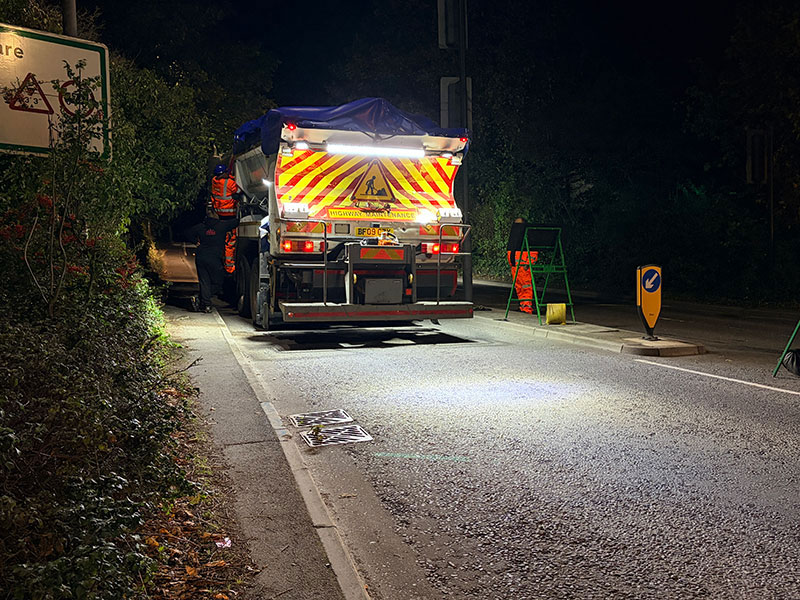
Preventative maintenance means treating roads before they fail, rather than waiting until potholes and major defects appear. This includes surface treatments such as sealing, patching and surface dressing early, which helps keep water out and slows deterioration.
It may look like we are treating roads that don’t need it, but this approach is proven to be cost-effective and reduces disruption because it avoids extensive repairs later. It is a key part of good highway asset management.
All of this work is focused on safeguarding our roads and delivering for you.